Diana Jones's bereavement and depression
Falling For The CEO: BAD BOY ROMANCEDiana Jones's bereavement and depression is the enduring psychological state produced by the deaths of her parents and repeatedly reactivated by later experiences of separation. It first pulls her out of university and into months of disorder, then is partly eased by Connor Jones's determined care and the meaningful work he helps her find at the Grace Hotel. Later, the same wound appears as a fear of being left alone, shaping Diana Jones's response to William King and turning romantic loss into an echo of parental loss. Her eventual strength lies not in forgetting her parents or ceasing to fear abandonment, but in understanding the fear well enough to refuse its control.
Origin in Parental Loss
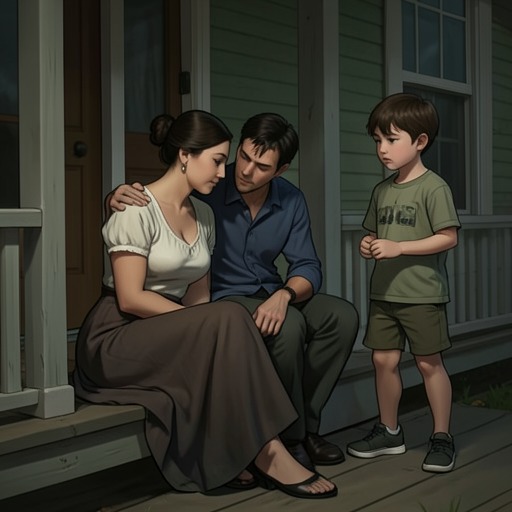
Diana Jones's depression follows the deaths of Cora Jones and Derek Jones in a car crash on the day before Diana Jones's final first-year examination. She insisted on writing the exam, a decision that reveals the force of denial during the first week of bereavement: she attempted to perform an ordinary obligation while the reality of the loss had not yet fully entered her life. The funeral temporarily brought practical support from her aunts and uncles, but watching her parents' coffins descend into the ground and then seeing mourners return to their own lives marked the point at which her grief began to deepen. Public farewell ended; private suffering continued.
Her memories preserve Cora Jones as the kindest person she had known, a mother who repeatedly sacrificed her own happiness for Diana Jones's. Derek Jones, in Diana Jones's understanding, loved Cora Jones completely. This remembered marriage becomes part of what she has lost: not only two parents, but an image of mutual devotion and dependable protection. The tenderness of these memories intensifies the depression because the people who embodied safety are also the people who cannot return.
The family history surrounding Connor Jones gives Diana Jones's grief an additional moral and emotional complexity. Derek Jones had previously been married to Luna Jones, Connor Jones's mother. After Luna Jones's erratic highs and lows endangered the care of her newborn son, she was diagnosed with bipolar disorder, filed for divorce, and left Connor Jones with Derek Jones. Connor Jones was six when Derek Jones remarried Cora Jones, and although Cora Jones tried to welcome him, he maintained a protective distance. Diana Jones had once regarded Connor Jones as the abandoned child while she herself still possessed both parents; after their deaths, she wondered with shame whether she had failed to show him sufficient compassion. Her grief therefore includes guilt about having been the more fortunate sibling and anxiety that loss has forced her to inhabit the abandonment she once observed from outside.
Depression and Disrupted Adulthood
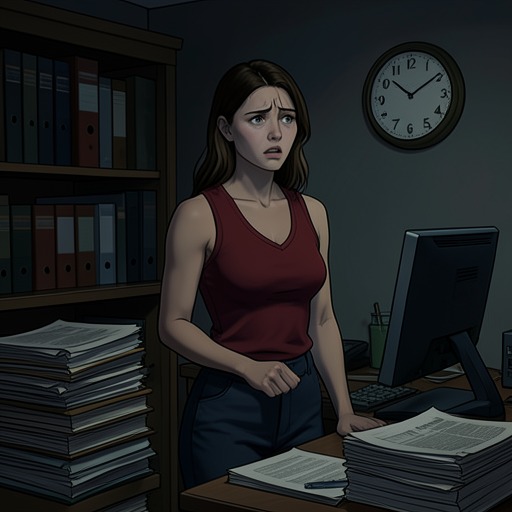
After the funeral, Diana Jones slipped into a depression that dismantled the momentum of her young adult life. She failed to return for her second university year, lost a scholarship, and lost more than a few friends. She remembered little of the period clearly and described her life as months of complete chaos, suggesting that bereavement impaired not only motivation but also continuity of memory and identity. Six years after her parents' death, she still did not feel fully grown or as independent as Connor Jones. Their deaths had occurred just as she was beginning to establish herself, making the loss feel like an interruption of adulthood rather than a wound confined to the past.
Connor Jones became the immediate agent of her recovery. When he recognized what was happening, he arrived at her house one morning and refused to leave unless she accompanied him to work. For the first month, Diana Jones went to the hotel partly because she did not want guilt to keep Connor Jones from his own job. His intervention was forceful rather than delicately therapeutic, but it supplied the external structure she could not create for herself. The sibling relationship thus became a practical form of care: Connor Jones did not merely sympathize with her depression; he physically and socially redirected her toward a routine.
At the Grace Hotel, that routine gradually became something more than an obligation. Kate and the other concierges showed Diana Jones around, and she discovered that she enjoyed communicating with guests and helping them decide what to do in Cape Town. Her interest led her to propose planning trips for visitors, first hesitantly because the role was not formally permitted. Connor Jones arranged a trial period after hearing how much guests wanted her involvement, and the response was strong enough for him to authorize her to concentrate on that work. Researching Cape Town's history and culture, guiding guests through the city, and responding to both pleasant and difficult visitors gave her a field in which knowledge, attention, and sociability mattered.
The decisive change was experiential rather than declarative. Diana Jones did not simply decide to recover; she found herself returning to life through repeated contact with other people and with the city. She could describe familiar sights mechanically, yet a guest's fresh response made those sights vivid again. The work allowed her to see Cape Town through other people's eyes and to fall in love with it repeatedly. In this sense, the profession became a recovery practice: it restored movement, communication, curiosity, and a sense that her presence could benefit someone else. The text explicitly contrasts merely surviving with living again, making employment the central recovery structure of her bereavement.
Recurrence Through Fear and Isolation
The depression remains active beneath Diana Jones's competence. When the Grace Hotel faces threatened changes and she fears losing the work that saved her, the prospect is not merely professional. The hotel represents the routine that pulled her from depression, so its possible disappearance threatens to return her to the earlier void. Her early-morning walk through the quiet hotel offers temporary calm, but the reminder of William King and the pending danger follows her into the day. The workplace functions simultaneously as refuge, identity, and a source of insecurity.
Diana Jones's claustrophobia provides a bodily expression of the same fear of entrapment and helplessness. When the elevator abruptly stops, the lights fail, and she strikes her head, she is held in the dark by William King. As the situation catches up with her, she realizes that her difficulty breathing is connected to being trapped in an enclosed space. The episode is not identical to bereavement, but it makes psychological confinement physically immediate: darkness, dependence on another person, breathlessness, and the fear that escape may not come. Her effort to regulate herself through slow inhalation and exhalation shows how much she must actively contain what the environment awakens.
The clearest return of the grief occurs after the rupture with William King. Diana Jones takes a sick day because she cannot summon the motivation to conduct scheduled tours, then spends a sleepless night replaying the relationship and regretting that she did not tell him the truth or apologize. The couples she guides remain unaware of the turmoil within her, creating a painful contrast between the professional role of facilitating other people's happiness and her private inability to inhabit her own. Her exhaustion is emotional as much as physical, and Connor Jones again has to find her and take her home.
During the following reflection, Diana Jones identifies the deeper source of her behavior. She initially explains her deception to herself as fear for her job, but later recognizes that something planted by her parents' deaths has shaped her reluctance to tell William King the truth. She is afraid of being alone and of being forced to feel again what she experienced after Cora Jones and Derek Jones died. Connor Jones is present and loving, but he has built an independent life and only incorporated Diana Jones into it after making sure she was safe. Diana Jones understands that this is appropriate, yet still experiences the distance as abandonment. Her grief has therefore become an attachment expectation: every important departure threatens to confirm that she will ultimately be left alone.
Recovery Without Erasure
Diana Jones's movement through bereavement is not linear. It alternates between loss-oriented states, such as rumination, sleeplessness, avoidance, resentment, and longing, and restorative activities, such as work, tours, gardening, and deliberate reflection. After separating from William King, she spends a Saturday morning pulling weeds from the neglected garden of her home in Camps Bay. The physical act feels cathartic, while the old swing and view of waves against the mountain give her a place to acknowledge the exhaustion she has hidden during sixty-hour workweeks. Gardening does not solve the emotional crisis, but it lets her feel it outside the demands of the hotel.
Her response to William King shows that recovery has changed the terms of her fear. She misses him intensely and sees disappointment mirrored in their brief encounters at work, yet she avoids pursuing him because she believes both of them need space. She refuses to remain with him unless he is ready to be with Diana Jones herself, not merely with an image shaped by his unresolved marriage to Julia. This boundary would once have been impossible for her: only months earlier, she believes, fear that he might never heal would have driven her to demand immediate reassurance. Now she can wait, even while recognizing the vulnerability of that choice.
The act of waiting is not presented as emotional detachment. Diana Jones loves William King and admits that the love would remain even if she eventually moved on. She tells herself that she can cherish what the relationship gave her, but the deeper achievement is that she no longer allows anticipated abandonment to decide for her. She can acknowledge that William King has left her in the present without reducing him to a permanent enemy, and she can acknowledge her own deception without treating it as proof that she is beyond repair. Her grief remains painful, but it becomes something she can interpret.
Narrative Significance
Diana Jones's bereavement links the book's family history, workplace identity, physical fear, and romantic conflict. The abandonment of Connor Jones by Luna Jones, the deaths of Cora Jones and Derek Jones, and Diana Jones's separation from William King form distinct experiences, but Diana Jones's mind repeatedly places them in the same emotional pattern. The narrative consequently treats depression less as a single episode than as a structure through which later events acquire meaning. A job loss, a dark elevator, or a lover's withdrawal can reopen the original wound because each threatens safety, continuity, or companionship.
At the same time, the Grace Hotel work and Diana Jones's tours prevent the grief from becoming her entire identity. She is a bereaved daughter, but also a sister, guide, researcher, and companion capable of giving other people access to Cape Town's history and culture. Her explanation of the Bo-Kaap Museum's connection to the abolition of slavery in 1834 shows the confidence and care she brings to that role, even when William King is present and her attention is divided. The professional self is not a mask that conceals the wound completely; it is one of the forms through which she survives it.
The state is finally significant because it makes emotional healing conditional rather than magical. Gloria tells William King that he has not dealt with the pain left by Julia and that love can help only after the hurt and wrongdoing are acknowledged. That principle also describes Diana Jones's trajectory. Her recovery begins when her loss is supported by others, but it matures when she names the fear beneath her actions and refuses to let it govern her future. Bereavement remains part of her history, yet it no longer has to be the sole author of her relationships or her life.